
Written by: Katie Crooks and Kim Hernandez (www.linkedin.com/in/kim-hernandez-romero)
When you hear the pulsating rhythms and call-and-response vocals of Go-Go music, one name immediately comes to mind: Chuck Brown. Known universally as the "Godfather of Go-Go," Brown didn't just create a genre; he forged a cultural movement that became the heartbeat of Washington, D.C. But what many might not know is that the roots of his groundbreaking sound, and his journey as a musician, stretch back to a place of confinement: the Lorton Correctional Complex.
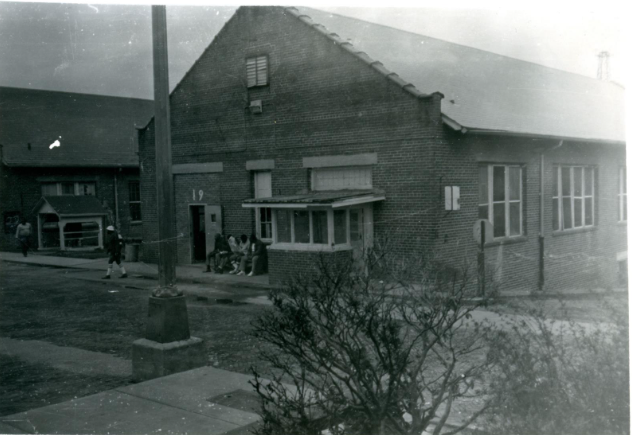
Before he was commanding stages and electrifying crowds with the Soul Searchers, Chuck Brown was incarcerated at the Lorton Reformatory in the 1950s. Surrounded by men who had played with the likes of Duke Ellington, he made a deal with one fellow inmate: 5 cartons of cigarettes for his guitar. From there, Brown joined the prison band and performed regularly. When show times coincided with mealtimes, Brown would choose music over food to feed his soul. Many inmates followed suit to join the audience, and Brown knew he’d found his calling. Music would be his path forward.
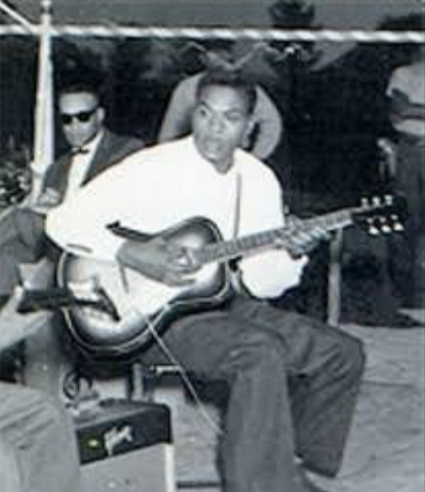
Chuck Brown was not alone in his tunes behind prison walls, becoming part of a larger history of prison music. Even in the 1930s, up to five million listeners a year jumped at the opportunity to hear inmates perform through the radio show “Thirty Minutes Behind the Walls.” Brown’s prison music roots blossomed into his 1970s development of Go-Go, a vibrant, continuous party beat that blended funk, rhythm and blues, and Latin percussion. His innovative approach, characterized by live improvisation and audience participation, made Go-Go a uniquely D.C. phenomenon, deeply embedded in the community's fabric.

Chuck Brown's career came to a halt with his death in 2012. Four years later, a new yet strikingly similar voice took up the torch: his son, Wiley Brown. Joining his father onstage from the age of four, and soothed to sleep by the sounds of his guitar, Brown's childhood dream was to be just like his father. With his football career interrupted by an ankle injury, a single performance with the Chuck Brown Band spiraled into a full-time gig. Audiences were amazed by his uncanny likeness to his father. Nevertheless, Brown is unafraid to blend in his own style and embrace his father's openness to change. In 2022, he released his debut solo single “Not Obligated.”
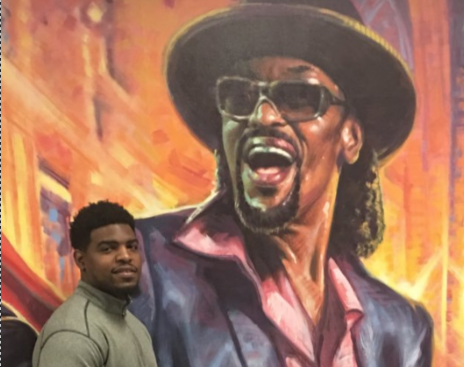
This past Second Saturday, Brown returned for a Workhouse Arts Center performance, where his father’s love of music sparked decades ago. He writes of the soul-stirring experience, “Talk about things coming full circle. I could feel his energy and spirit as a chill hit me right before I hit the stage.” As co-founder of the Chuck Brown Foundation, this same energy has inspired him to petition digital music platforms to recognize Go-Go as a genre. More than anything, Brown emphasizes the need for Go-Go to reach the youth, who will keep the D.C. Go-Go music scene thriving for generations to come.

Chuck Brown’s story is more than a musical success story; it’s a profound example of the power of art to transcend circumstances. He is best remembered not for his challenging past, but for a musical sensation that only resonates more each day. The next time you hear a Go-Go beat, remember its Godfather, Chuck Brown, and the unexpected place where his legendary journey began: strumming a guitar for his fellow inmates in prison. His is a powerful reminder that sometimes, the most transformative lessons are learned in the most unlikely of classrooms.
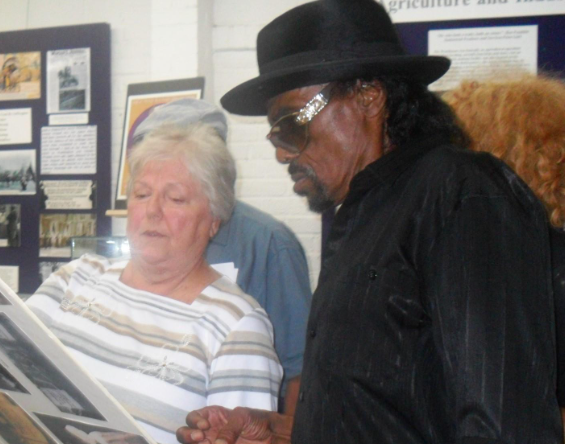
Irma Clifton and Chuck Brown, ca 2010.
Taken when Chuck Brown came in to give his oral history to the Lorton Prison Museum.
Discover More at Workhouse Arts Center
If you missed this Workhouse Arts Center performance, then keep an eye on our calendar of events for news on innovative exhibits, lively comedy shows, and more! We have also launched the exciting pilot program Freedom Through the Arts, providing free art classes for returned citizens and families impacted by the justice system. From ceramics to flameworking, express your creativity to your heart's content.
Curious to learn more about Northern Virginia’s history? Pay a visit to The Lorton Prison Museum, and you’ll have 91 years of the past at your fingertips.